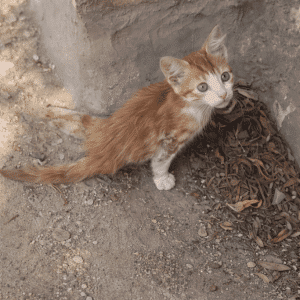
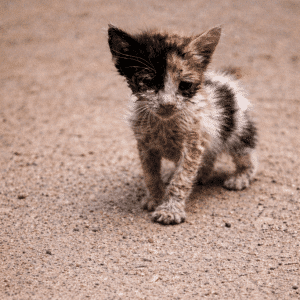
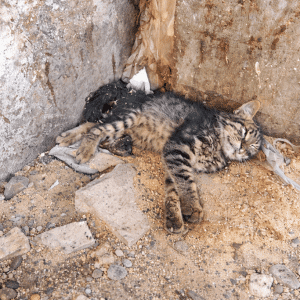
For a long time, the stray cat survived on instinct alone.
Each day, he gathered whatever strength he had left and approached passing strangers, lifting his head just enough to show he was still there. He wasn’t loud. He didn’t beg. He simply waited — hoping for a scrap of food or a moment of kindness. Most people walked past without noticing. Hunger became routine. Exhaustion followed him everywhere.
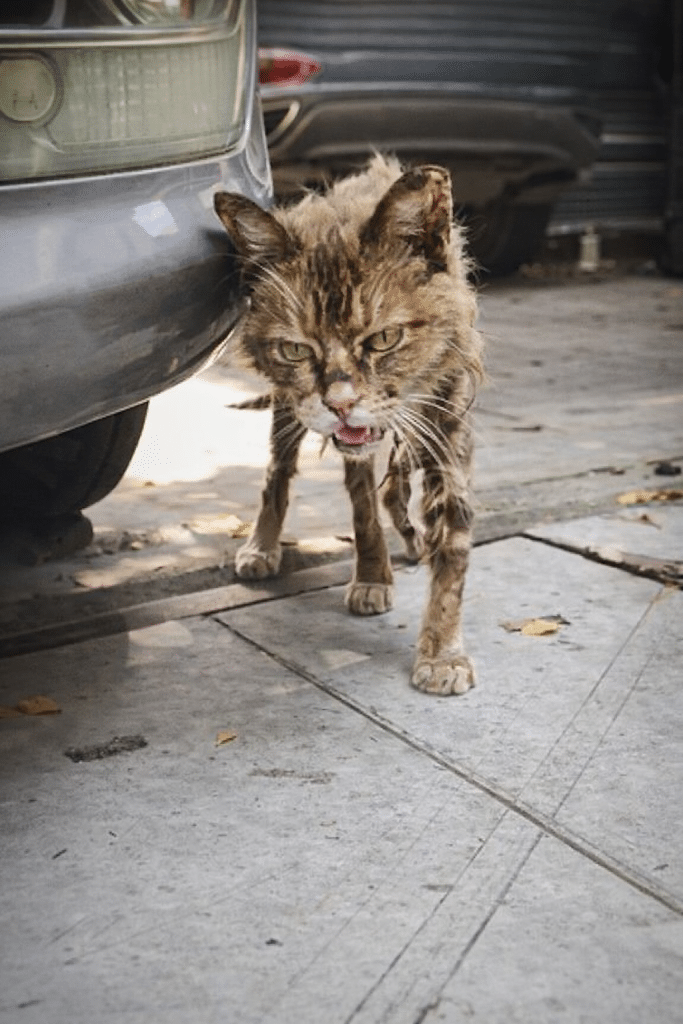
Eventually, someone found him curled beneath a parked car, pressed tightly against the cold pavement. His body was painfully thin, his bones visible beneath thinning, patchy fur. When he tried to stand, his legs shook beneath him. Yet despite how weak he was, there was something unexpected about him — he was gentle, calm, and strangely trusting.
When rescuers spoke softly, he didn’t resist.
He listened.
A Body That Had Been Fighting Too Long
The cat was named Qi Wang and rushed to a veterinary clinic. Initial tests revealed what his fragile appearance had already suggested. He was suffering from severe anemia, compromised liver function, and an extremely high white blood cell count — signs that his body had been under relentless strain for a long time.
Video: From Skin and Bones to Strength — Qi Wang’s Road Back from the Edge
Qi Wang hadn’t just been hungry.
He had been slowly fading.
Healing That Required Patience, Not Speed
Treatment began immediately, but nothing about it was rushed. Qi Wang received injections to stabilize his condition, probiotics to support a digestive system weakened by long-term malnutrition, and gentle supportive care to avoid overwhelming his body.
As part of his recovery, veterinarians also introduced acupuncture — not as a cure, but as a way to stimulate his system softly, encouraging circulation and balance without adding stress. It was a quiet approach, fitting for a cat who had already endured too much.
Once his condition stabilized, Qi Wang was able to leave the clinic and continue healing at home.
Learning That Care Could Be Gentle
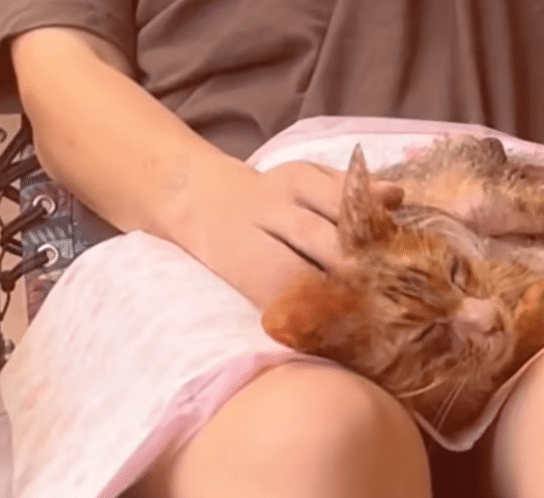
At home, recovery became a daily routine built around patience. Meals were carefully prepared to rebuild his strength. Grooming sessions removed layers of dirt while soothing his irritated skin. Even bath time was slow and deliberate, ensuring he never felt threatened.
Digestive issues lingered, so his caregivers learned how to gently massage his abdomen to support healthy digestion. During these moments, Qi Wang never pulled away. Instead, he leaned into the care, responding with quiet purrs and steady eye contact — as if he understood this was different from everything he had known before.
Trust came first.
Strength followed.
Small Changes That Meant Everything
Progress was gradual. There were days when improvement was barely visible. Qi Wang’s body was fragile, and recovery demanded time. But emotionally, something was changing.
He began following his caregivers from room to room. He sought out company. The cat who once waited silently on the street now wanted to be near people — not for food, but for connection.
Four Months Later, a Different Cat
After more than four months of consistent care, the transformation was undeniable.
Qi Wang stood taller. His fur grew back thick and healthy. His weight increased steadily, and his movements became confident and coordinated. The weakness that once defined him was replaced by curiosity and quiet energy.
He began to play.
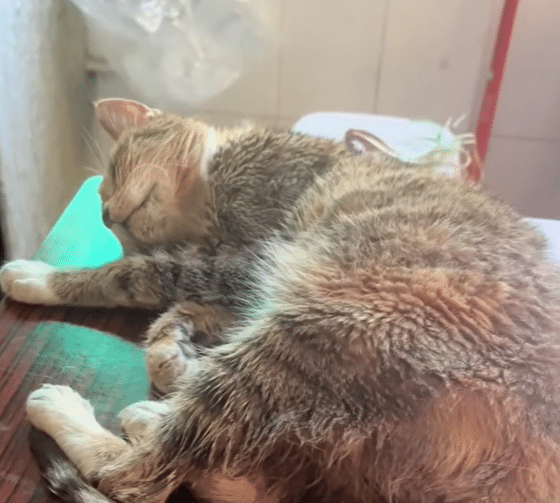
He explored.
His eyes, once dulled by exhaustion, now reflected awareness and calm joy.
A Life No Longer Spent Waiting
Today, Qi Wang lives in a home shared with other cats, surrounded by routine, safety, and companionship. He spends his days resting comfortably, playing when the mood strikes, and enjoying affection without fear.
He no longer waits for kindness to pass by.
He lives inside it.
Qi Wang’s story isn’t loud or dramatic — and that’s exactly why it matters. It reminds us that many animals don’t cry out when they’re suffering. They endure quietly, hoping someone will notice before it’s too late.
This time, someone did.