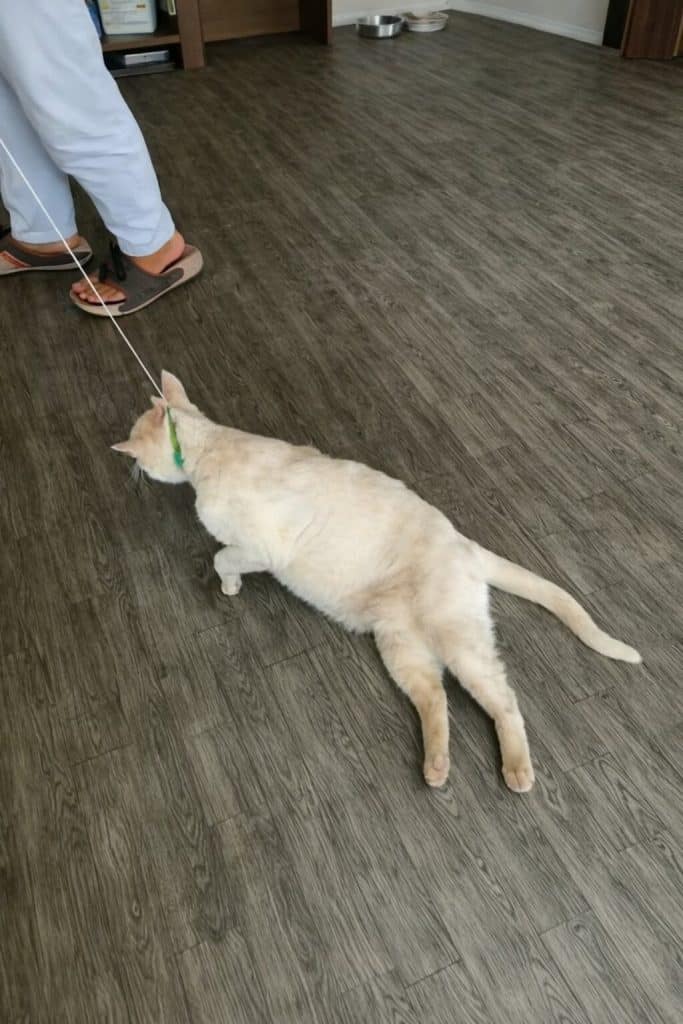
At first glance, he looks like a gentle white cat going for a walk.
But when he begins to move, the difference becomes clear.
His back legs remain still.
They do not step.
They do not support.
They simply trail behind him.
A Body That Moves Differently
He is living with paraplegia — complete paralysis of both hind legs.
When placed on the floor, his front paws take over. Strong and determined, they grip the surface and pull his body forward. His back legs follow quietly, unable to participate but still part of him.
Each step requires effort.
Each small stretch forward is powered entirely by his upper body strength.
And yet, he keeps going.
VIDEO: Paralyzed in His Back Legs — Watch How He Refuses to Stop Moving Forward
Learning a New Way to Walk
Rather than staying still, he has adapted.
Cats are remarkably resilient. When one part of their body cannot function, they often find another way. For him, that means relying on his front legs to guide his movement across the floor.
A caregiver gently holds a leash attached to his harness — not to restrain him, but to help guide and stabilize his direction on the wooden surface. The support prevents sudden slips and gives him a bit of balance while he navigates.
It’s not about control.
It’s about safety.
Strength Isn’t Always Symmetrical
Watching him move is both tender and inspiring.
He drags.
He pauses.
He pulls again.
There is no frustration in his eyes — only focus.
Animals do not dwell on what they have lost. They respond to what is possible in the moment. And in his case, movement is still possible — just in a different form.
His journey isn’t defined by what doesn’t work.
It’s defined by what does.
The Care That Makes It Possible
A cat with paraplegia requires thoughtful support:
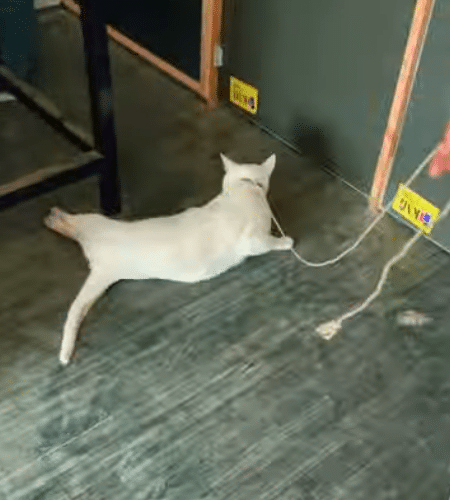
• A clean, smooth surface to prevent injury while dragging
• Assistance with hygiene if mobility is limited
• Monitoring for skin protection and comfort
• Encouragement without pressure
With proper care, many paralyzed cats live long, meaningful lives. Some use mobility carts. Others strengthen their front legs enough to move independently indoors.
The key is patience.
Moving Forward, His Own Way
He may not walk in the traditional sense.
But he moves.
He explores.
He responds.
He participates in the world around him.
And sometimes, that quiet determination says more than perfect balance ever could.
Because courage isn’t always about standing tall.
Sometimes, it’s about pulling yourself forward — one steady step at a time.