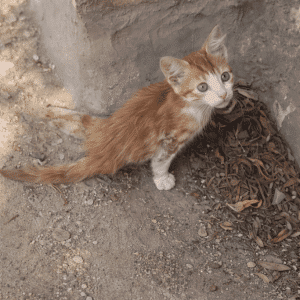
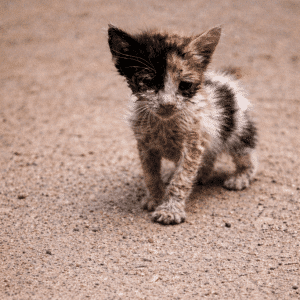
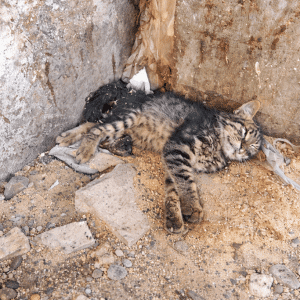
A rescued stray mother cat gave birth to something no one was prepared for. Among her kittens was one with two heads joined to a single body. Each head had its own eyes, nose, and mouth, moving independently—yet they shared the same fragile form.
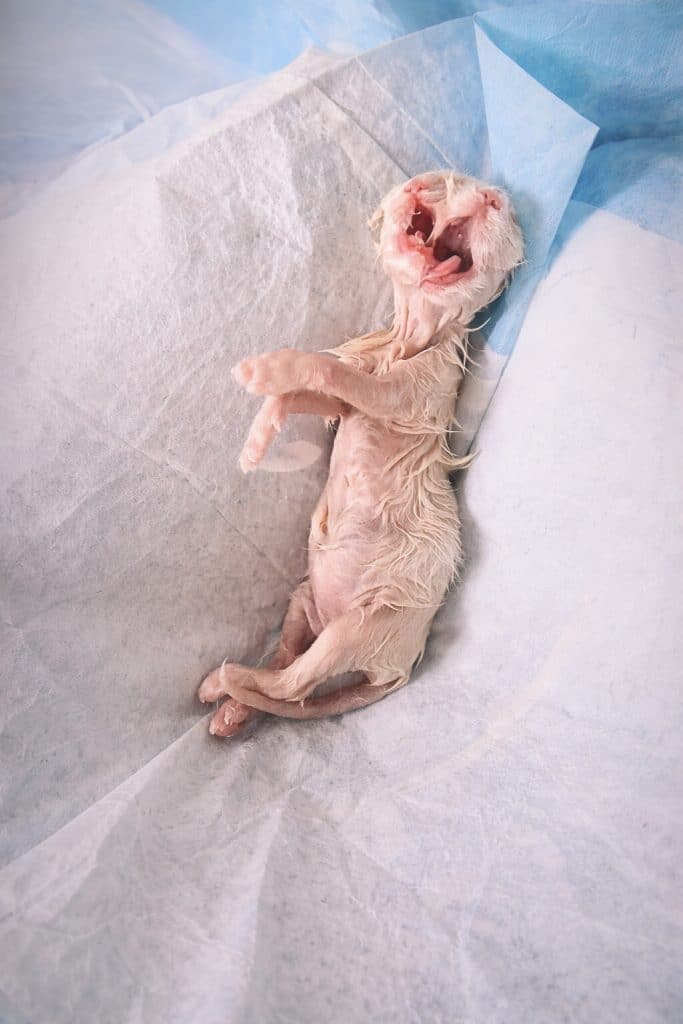
From the very beginning, it was clear this kitten’s life would be different, and deeply uncertain.
Special Care Begins (Day 2 – Day 3)
Because of its unique anatomy, the kitten was unable to nurse from its mother. There was no way for instinct alone to carry it forward. The responsibility fell entirely on human hands.
Rescuers began feeding the kitten with a syringe every two hours—day and night—without pause. Each feeding required patience, precision, and constant monitoring. The kitten responded with faint, fragile cries, a soft reminder of how vulnerable its life truly was.
VIDEO: Born Sharing One Body — A Two-Headed Kitten’s Fragile Fight for Life
Sleep came in short moments.
Rest was rare.
But care never stopped.
Growing — With Limits (Day 4 – Day 5)
By days four and five, the kitten continued to eat and sleep regularly. Against expectations, its body showed signs of basic stability. There was growth. There was warmth. There was life.
But challenges became more visible.
The combined weight of the two heads was heavy, while the neck was still too weak to support them. When the kitten attempted to move, its steps were unsteady and awkward. Balance was difficult. Every movement required effort far beyond what a newborn should face.
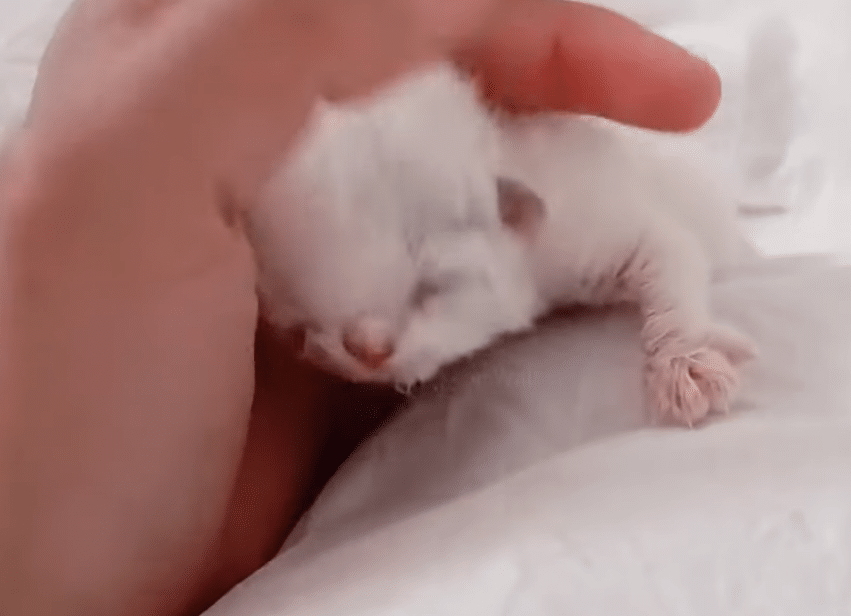
Still, the kitten kept trying.
A Delicate Turning Point (Day 6 – Day 7)
By day six, the kitten maintained a simple rhythm—eating, then sleeping—entirely dependent on human support. It could not survive without constant care.
On day seven, however, rescuers noticed a change.
The kitten appeared more tired.
Movements slowed.
Energy faded.
Its body, already working against extraordinary odds, seemed to be struggling to keep up.